comments 2

60th Birthday Celebrations and East London Musings

On Monday 9th March, 2026 I celebrated my 60th birthday. I planned a weekend that involved the things I love. Unsurprisingly the celebrations centred around food & drink. They also featured music, street art and some social history of London, my home city. I took my boyfriend Tony on this journey exploring East London, revisiting old haunts around Hackney Wick and Shoreditch. From an early age, I have been inspired by the creative imagination, artistry, fashion and music of David Bowie.
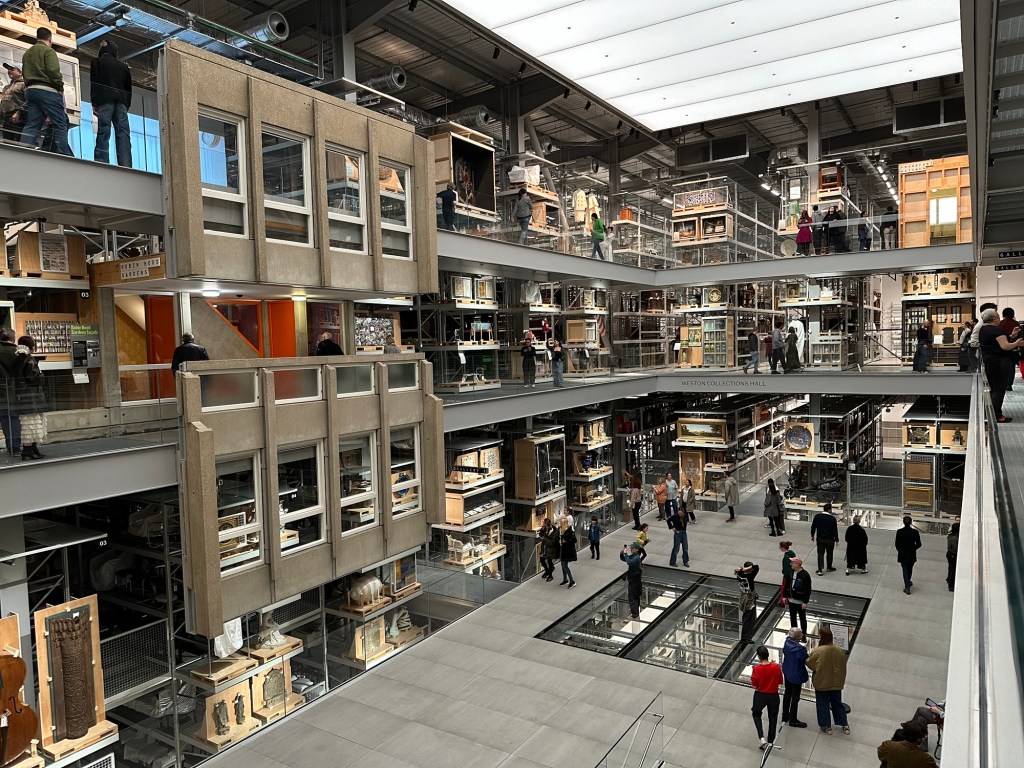
V&A East Storehouse, Hackney Wick

We visited his archives at the V&A East Storehouse in the Queen Elizabeth Olympic Park. On display were two letters which resonated with me. One was from Apple Records, stating they weren’t interested in signing David Bowie as an artist. Also there was a letter of recommendation written by David’s father. The V&A East Storehouse was impressive with an eclectic mix of artifacts on several floors. I liked the open design of the building and glass floor area which highlighted the huge number of items stored there. Amongst the stone busts, ceramics, clothing and furniture there were two much larger items. Firstly part of a concrete facade, doors and hallway that formed part of the Robin Hood Gardens estate in Poplar, East London.
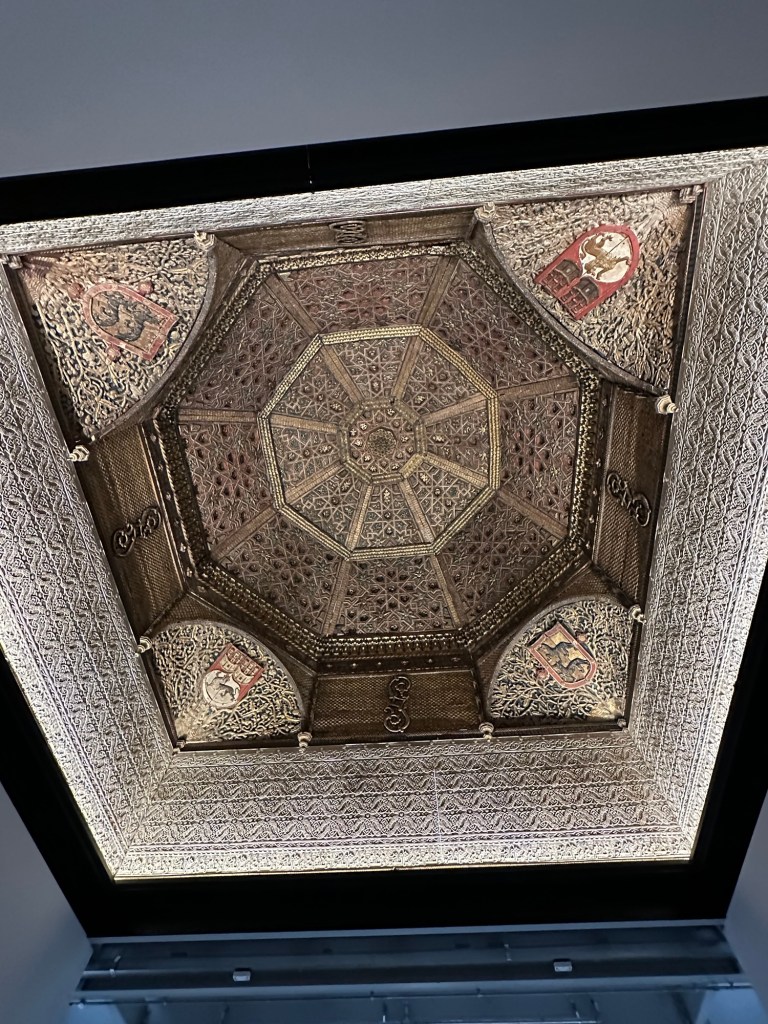
Torrijos Ceiling, V&A East Storehouse

Then even more incredible was a 15th Century carved Torrijos ceiling from Spain. It is a breathtaking example of Mudéjar carpentry with the design influenced by Jewish, Christian and Islamic cultures. I really loved how the museum had provided reclining chairs so you could lay back and admire the artistry of the ceiling above.

We walked along the Lea Navigation towpath spotting the numerous hoardings covered with graffiti and murals surrounding the multiple building projects. Memories of a bygone era before my time. I imagined what life was like for those living and working on Fish Island, a former industrial area of Hackney Wick. You can still see a nod to its industrial past from some of the buildings and chimneys that still remain.
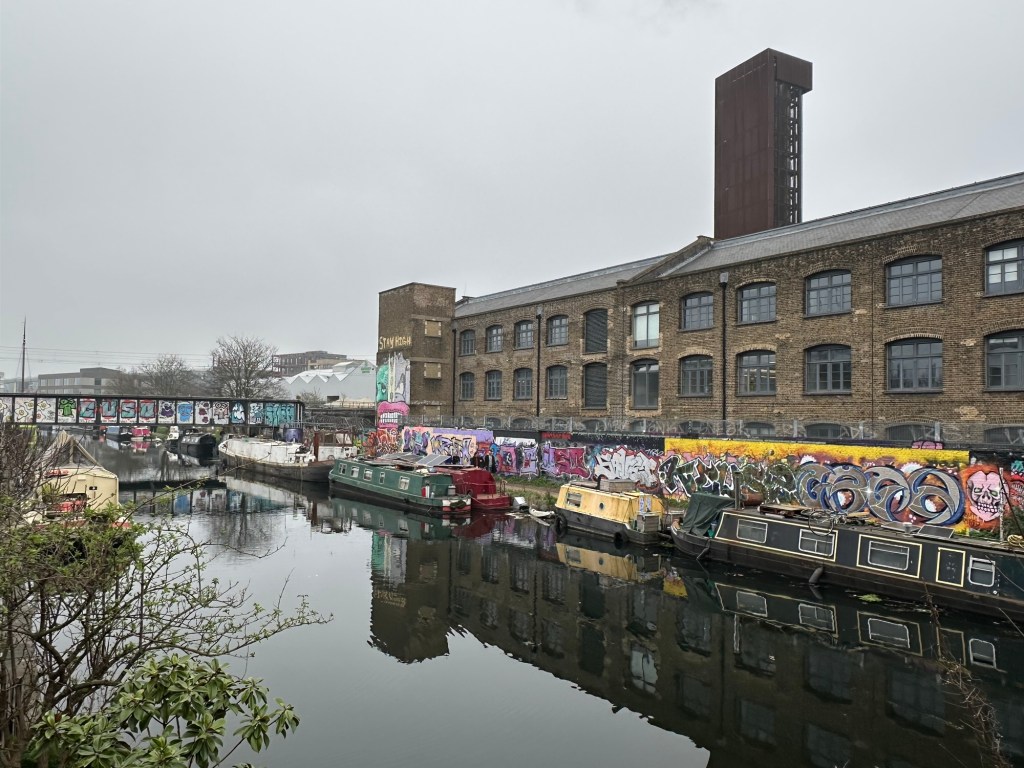
Lea Navigation Canal, Hackney Wick

My ancestors, three generations ago, arrived in East London. This part of London became their ‘new home’ after escaping the Pogroms in Poland and Russia in the 19th Century. Grandma Leah’s side of the family , five generations back, came to London in the mid 1850’s from an area that is now part of Germany. All of them economic migrants in search of safety, security and building a new and better life as part of the East London Community where being Jewish was accepted.
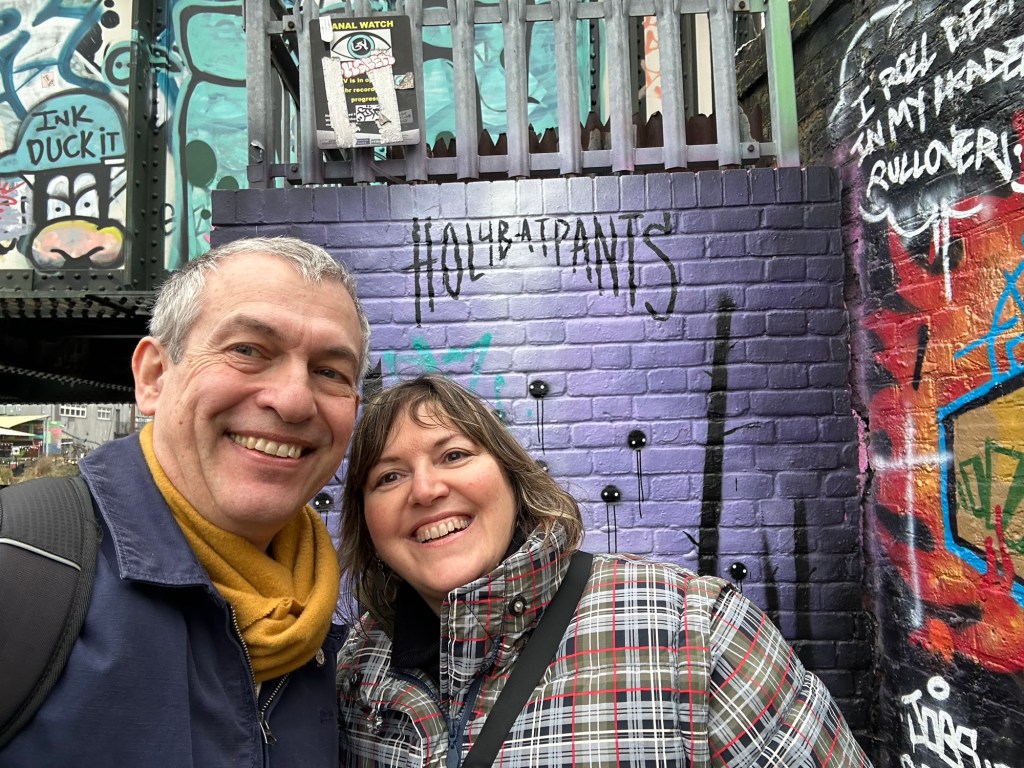
Strolling along Lea Navigation Canal, Hackney Wick

As we wandered around I spoke of family stories from my childhood and further back in time. Places such as Ridley Road market where my Great Uncle Charlie sold sweets, chocolate, tobacco and ice cream with a cheeky grin and lots of sales patter. In Bow, where my Dad and Uncle Norman designed and made reversible raincoats and ladies coats. In Hackney, where my grandfather Samuel, a master tailor had his workshop. Mum grew up in 1930’s in the rooms above. All long gone and replaced by Hackney college where my nephew Adam briefly studied. I was born in Homerton hospital and my family roots are here in Hackney, Clapton, Stepney Green, Bow, and Dalston. For the first three years of my life I lived in Clapton with my Mum, Dad, brother Pete, Uncle Ivor and Grandma Leah. I remember my grandma making lokshen noodles, drying the thin pasta like strands on the clothes rack in her small Victorian kitchen above the hearth. There was a big pot of chicken soup simmering away, filling the house with aromas of savoury bone broth- Jewish penicillin. All in preparation for our family dinner. Grandma’s cooking had legendary status. Aunts, uncles, and her children that were no longer living at home would turn up, with perfect timing to enjoy her food. She, in turn, loved feeding the family. Another family ritual was with my Dad and brother Pete. We would go to buy beigels from the bakery in Evering Road, Clapton on Saturday morning after Dad had finished work in the coat factory. The beigels were really warm, just out of the oven. Enticing baked aromas and so comforting. I tightly clutched the paper bag filled with plain beigels cuddling it like a hot water bottle against the cold Winter’s chill. Seven year old me was hungry in anticipation, of biting into a warm beigel filled with cream cheese or smoked salmon for lunch.

Lots of family stories with food at its heart.

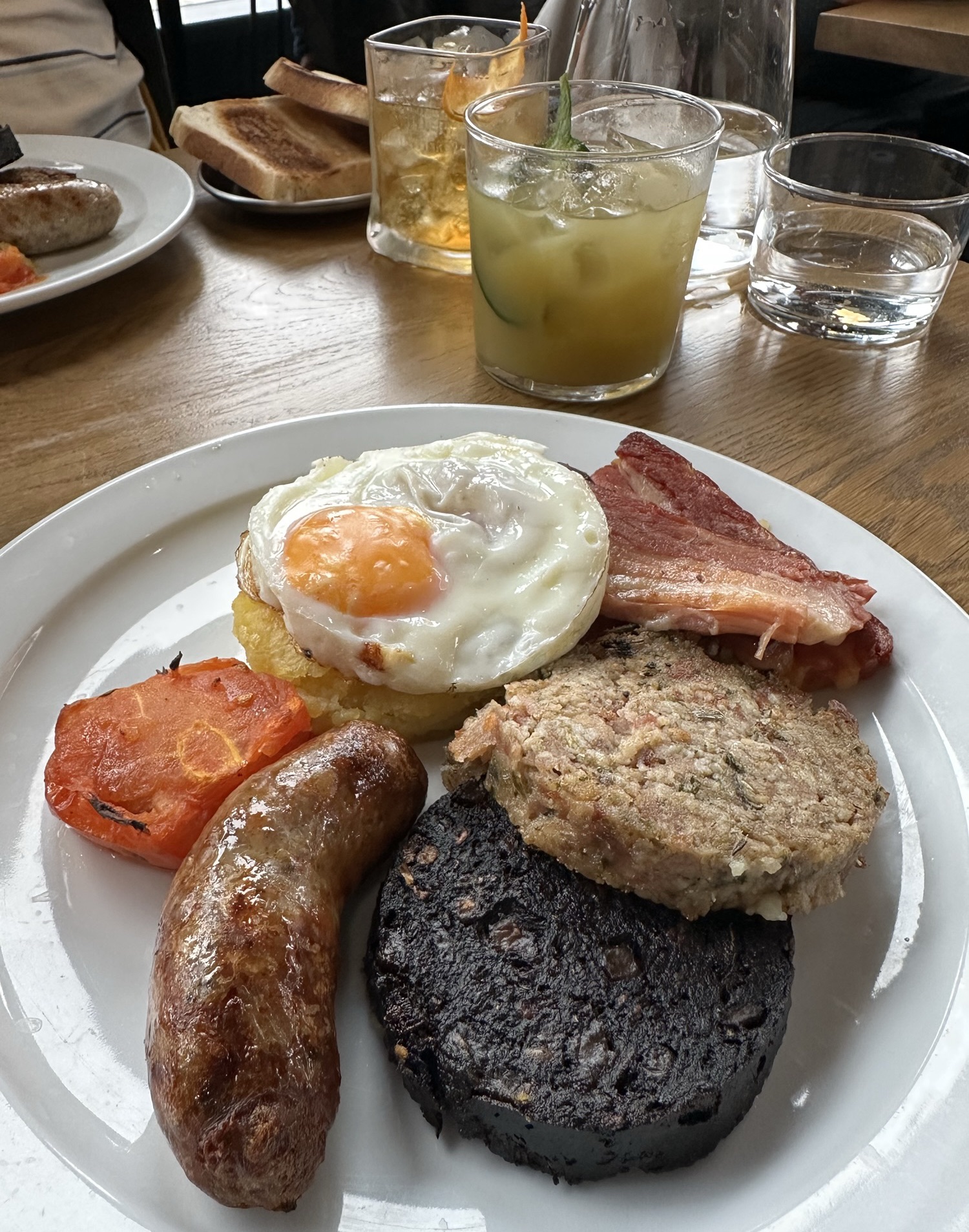
For my 60th birthday weekend, we started on Sunday at Inis, Fish Island with a fabulous Irish breakfast. This was accompanied by fantastic bread baked by the Dusty Knuckle crew in Dalston and delicious cocktails.

We drank stout at Crate Brewery in Queen’s Yard. They no longer brew on site however the design reflects the industrial heritage of the building.
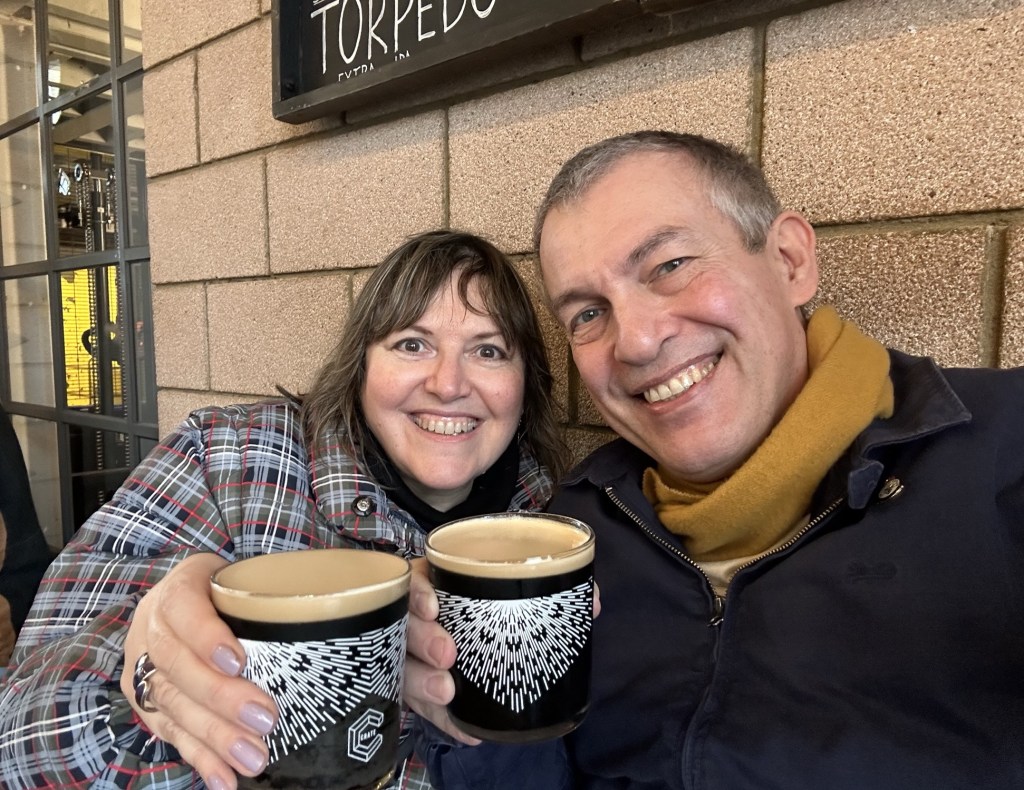
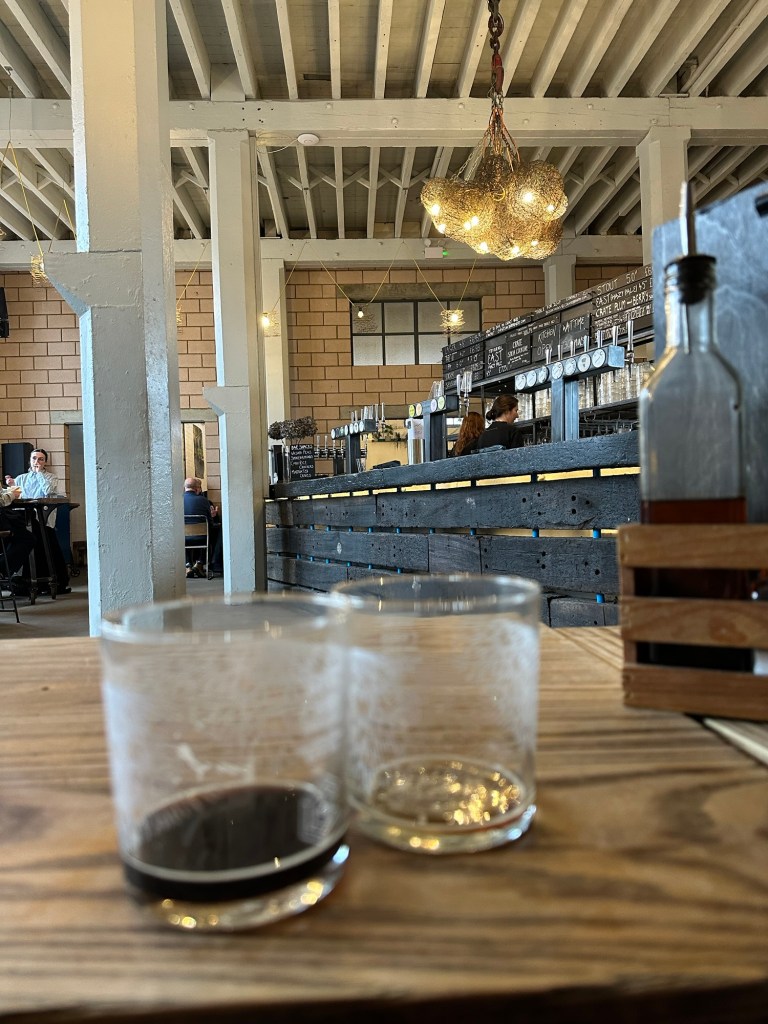
Cheers!
Crate Brewery, Hackney Wick

The bar is made of reclaimed railway sleepers, the tables of scaffolding poles, the seats from bed frames and the lights from old bed springs.
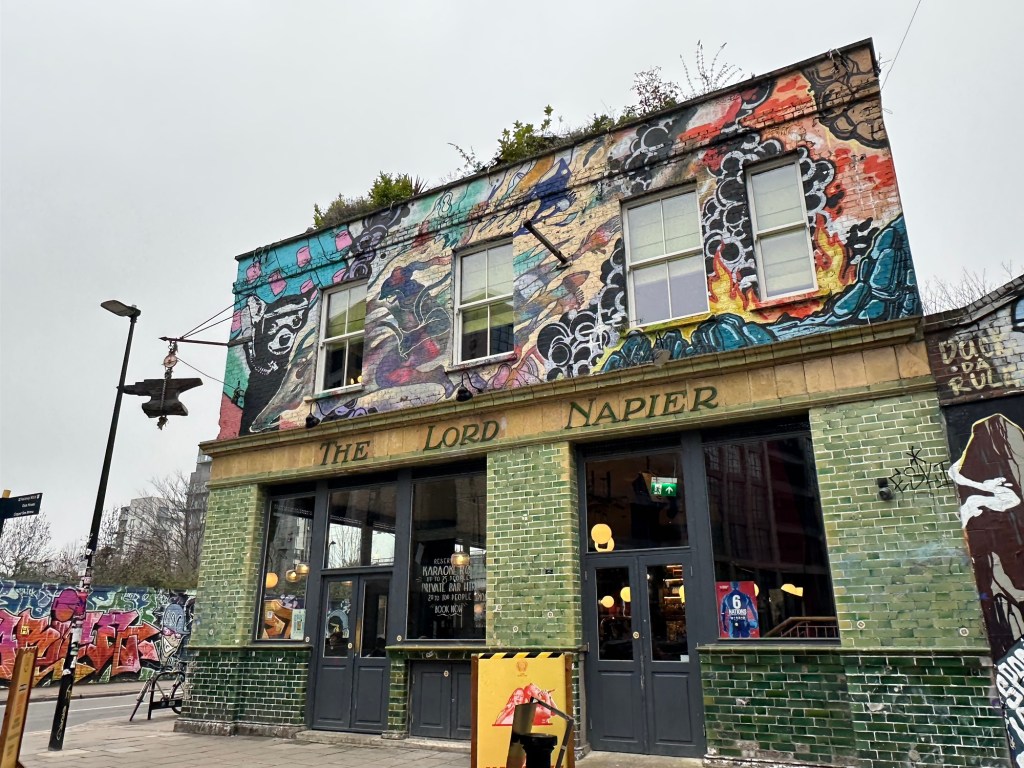
The Lord Napier Star Pub, Hackney Wick

We visited The Lord Napier Star pub admiring the street art on the building and surrounding hoardings. I remember the old derelict pub, which became a hub for the street artist community. The pub has since reopened and several artists were invited to paint as part of the refurbishment.
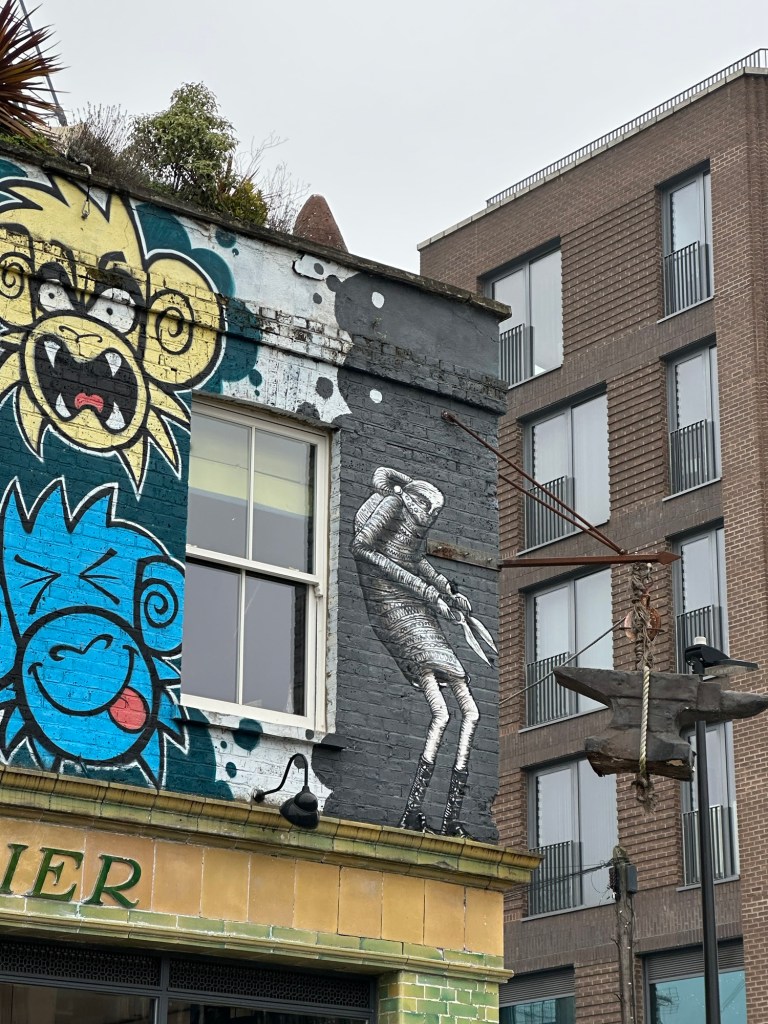
Phlegm, street artist on the Lord Napier Star pub

I particularly like the work of Phlegm with one of his characters pulling on a rope holding up an actual anvil, hanging from the corner of the pub outside. It reminds me of the struggle my own family endured with poverty and persecution. Ever changing and evolving with the determination to improve themselves.
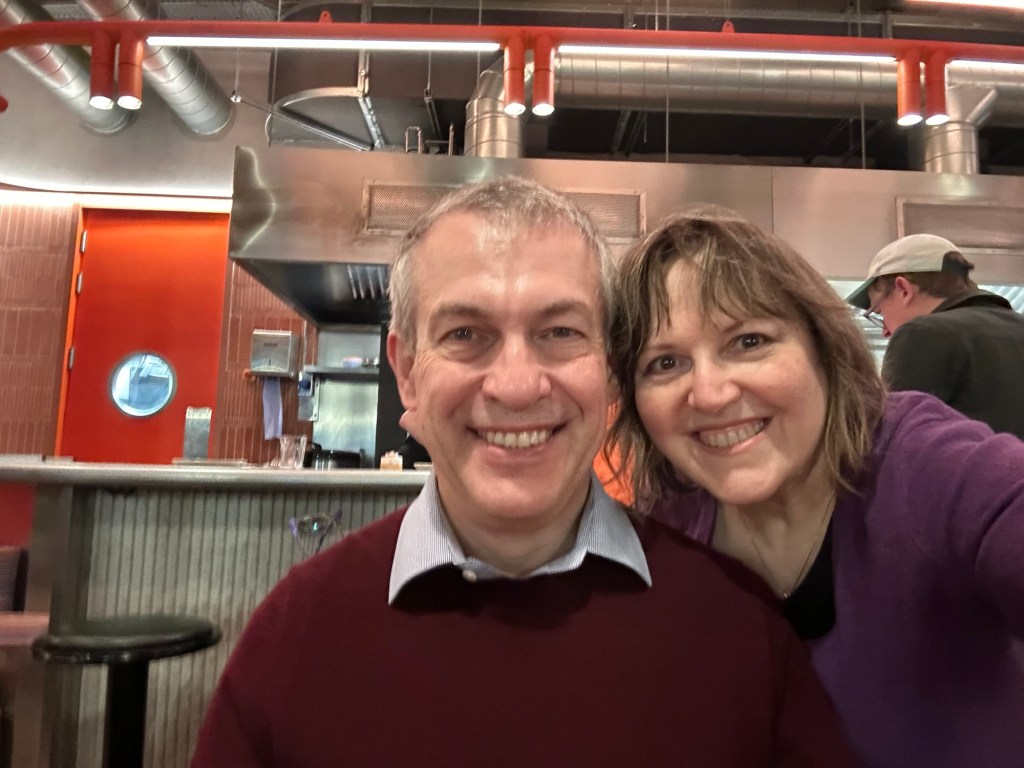
Tony & I at Singburi

We ate dinner at Singburi in Shoreditch on Sunday evening. Its new location with the sign from the old family restaurant, a nod to its roots in Leytonstone.

Grilled Gurnard with Nam Jim Talay at Singburi

The food was incredible and a highlight was the grilled gunard fish with a spicy green chilli sauce called nam jim talay. Very ugly but delicious! We watched the fish being expertly cooked on the white hot coals in front of us, the smoke rising from the open kitchen.

Aubergine Pad Phet at Singburi, with the Gurnard looking on!

I also really enjoyed the aubergine pad phet, a signature dish, which was spicy with lots of umami savoury flavours and soft melting textures.

Canary Wharf View

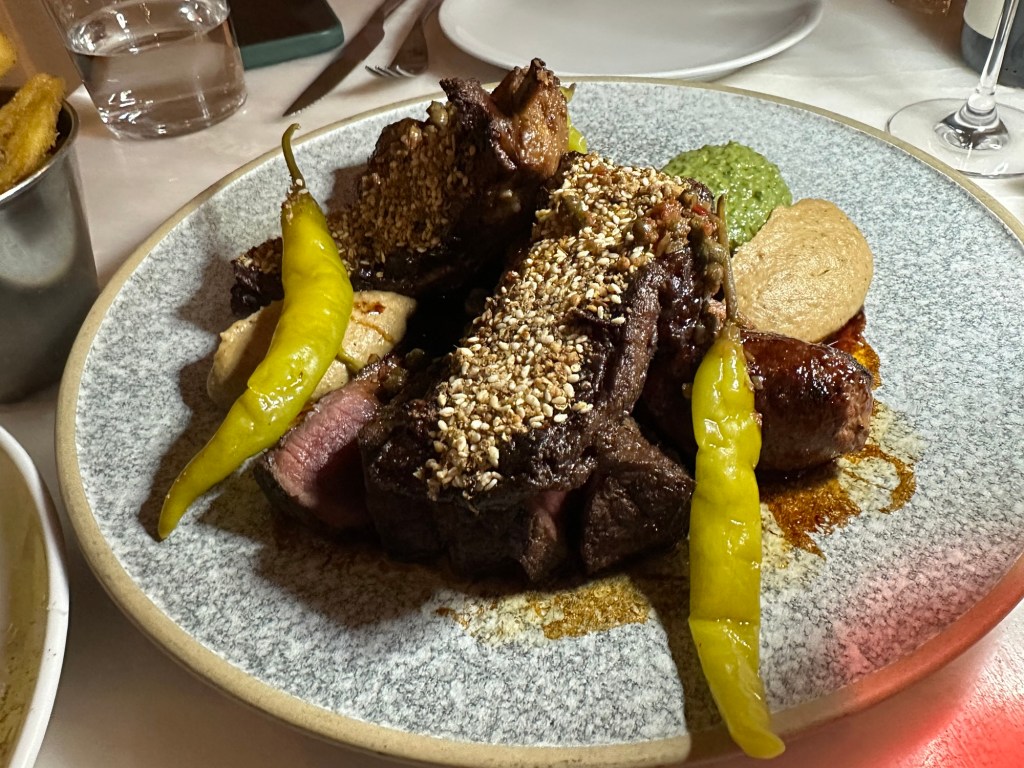
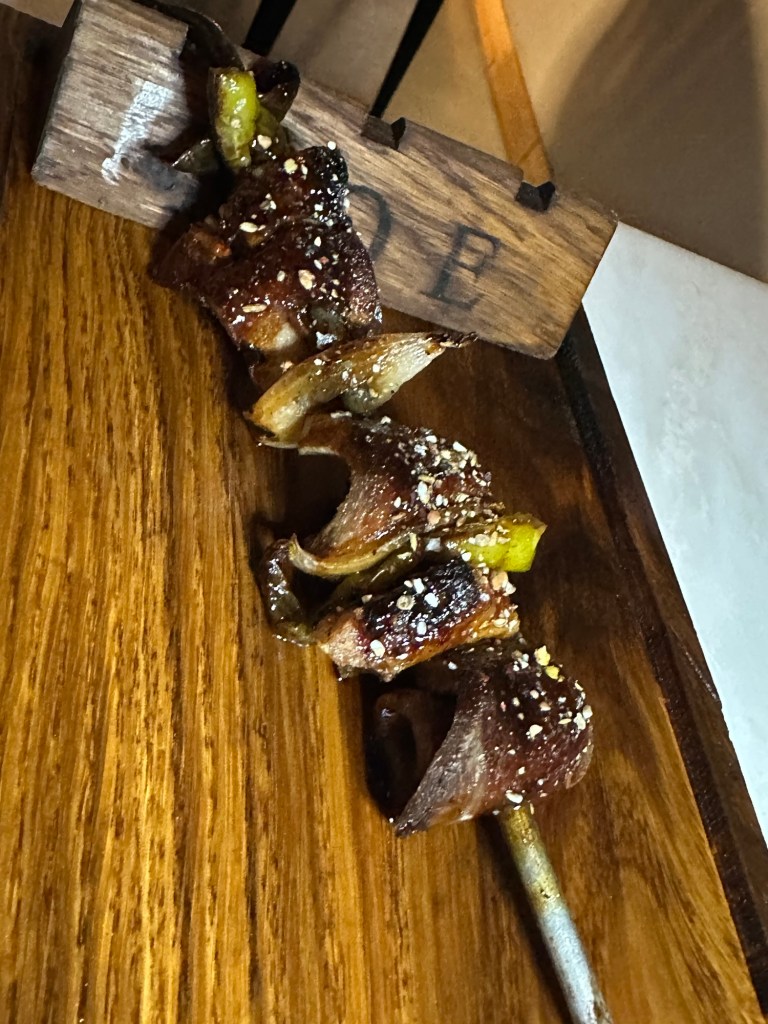
On my actual birthday we had an incredible dinner at Roe restaurant in Canary Wharf. The food, wine, fabulous customer service and attention to detail made this meal extra special. We thoroughly enjoyed the oysters and crab starters, tongue and cheek skewer and Roe mixed grill comprising of sticky, unctuous grilled venison haunch, crispy ribs and harissa sausage served with blistered Turkish peppers, aubergine puree, green Ezme. We also had crispy chips and a leek Caesar salad as sides.
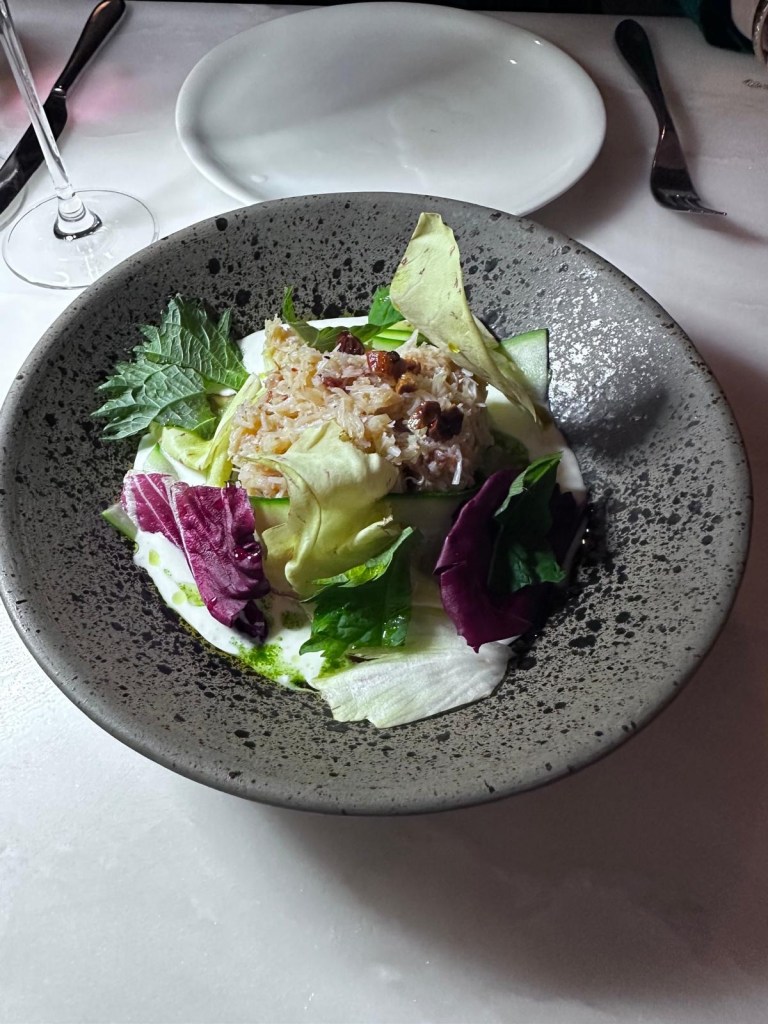
Devon crab, courgette, almond, kefir lime and horseradish at Roe
Tongue and cheek skewer at Roe
Roe Mixed Grill

As for dessert, when is a banana not a banana? When it is banana parfait that looks like a peeled banana, so light, creamy and delicious. A must have dessert in my opinion.
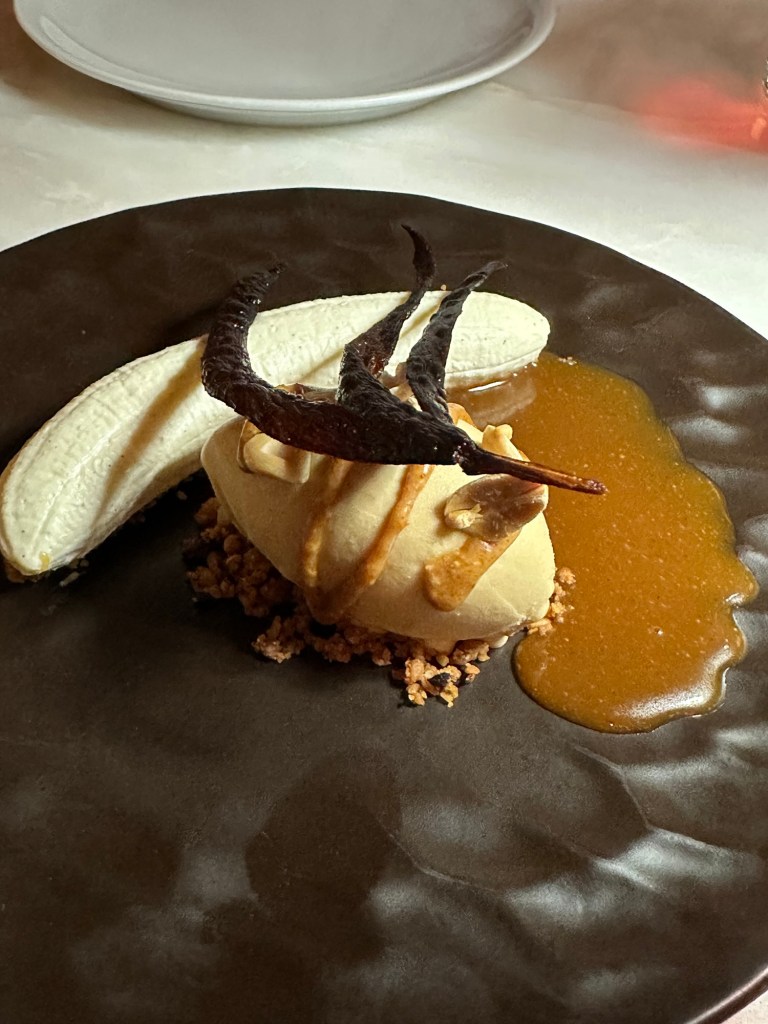
Banana Parfait at Roe

As I reflect on my life so far in my 60th year, I feel a fondness recounting our family history which is so inextricably linked with food, fashion and East London.

60th birthday toast at Roe
comment 0

Roasted Fennel, Easy Vegan Dish for the New Year

It’s 2023, and although I don’t make New Year resolutions I do like to make veggie focused dishes. Here’s one I made recently from Riverford Organic that tastes great, is easy to make and happens to be vegan.

Ingredients for 4-6 Servings

3 large fennel washed, base trimmed and fronds removed ( save fronds for later)

6 eschalion ( banana) shallots peeled and halved

2 small unwaxed lemons washed

12 pitted olives, green or black

Extra virgin olive oil

Salt and black pepper

2 -3 bay leaves ( optional)

Method

Preheat the oven to 180C fan (356 F)

Cut the fennel in half, and each half into 2-3 wedges

Cook the fennel in a large pan of salted boiling water for 5 minutes then drain in a colander

In a large oven proof rectangular dish drizzle about 1-2 tablespoons of olive oil on the base. Add the drained fennel, shallots and bay leaves and stir to coat everything

Juice one of the lemons and drizzle over the veggies

Cut the other lemon into thick slices and add to the dish

Add the olives and season with salt and black pepper

Give everything a final mix then bake for about 40 minutes, give the veggies a quick stir after 20 minutes

Once done the shallots and lemons should be caramelised. Check the seasoning. Roughly chop the fennel fronds and use to decorate on top

A great vegan dish perfect for Veganuary

Happy New Year!

If you prefer, this dish will also work with fish, white meats or eggs.

comments 3

Chocolate Babka: Baking, Birthdays and Lockdowns

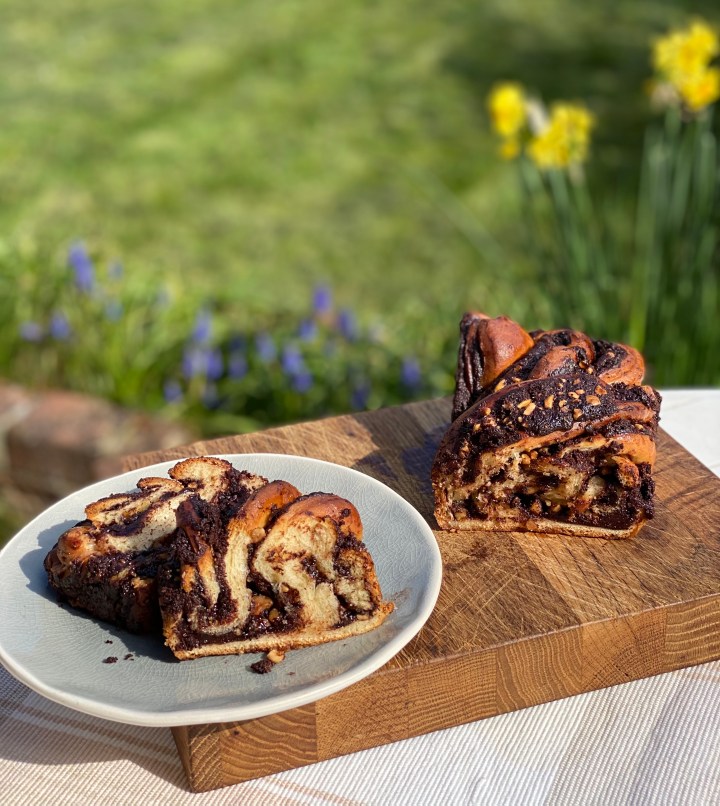
An alternative title for this blog post could have been the Babka baking bible. Simon suggested this due to the level of detail I have included. I didn’t mean to write quite so much however it has turned into everything you wanted to know about Babka but were too afraid to ask! Combining a love of baking with my food science and technology background meant I researched the subject thoroughly before attempting to make one.
Babka is something my Grandma used to make and has become popular again in bakeries and cafes in New York, London, and around the World.
I have wanted to make Babka at home but never got round to it until now. The consequence of living through the Pandemic and a 3rd lockdown here in London has given me the opportunity to give it a go. It’s also a day to remember and reflect as 23rd March marks the 1st anniversary since UK was put into lockdown and instructed to stay at home, save lives and protect the NHS.

I decided to make a chocolate and hazelnut Krantz loaf for my Dad’s birthday, as a surprise. With any family celebrations curtailed it would be a doorstep drop off, and a socially distanced chat a few metres away in front of his home.

Krantz is a type of Babka and refers to the plaited shape, baked in a loaf tin. I read that Babka can be a little tricky to make as it uses a yeast dough enriched with butter and egg. The dough proves slowly overnight in the fridge and needs to be handled when cold. I asked my local baker for some tips and she actually freezes her dough once rolled out for 10 minutes. I didn’t have any room in my freezer to try this tip. I researched Babka  comparing the recipes and methods from the following cookbooks and blog posts:

Yotam Ottolenghi & Sami Tamimi Jerusalem Cookbook

Sarit Packer & Itamar Srulovich Honey & Co. The Baking Book

David Lebovitz Chocolate Babka from his blog based on Honey & Co recipe with a few tweaks.

There were slight differences in each recipe and method. Using my food technology skills and experience I decided to come up with my own version based on all three recipes with a little twist.. literally!

I have previously  tasted the Honey and Co. amazing Babka at Sarit and Itamar’s restaurant of the same name in Central London. The photos in both Jerusalem Cookbook and David Lebovitz’s blog were very helpful and gave me confidence at each stage. The trickiest part was plaiting the split soft dough layers with chocolate & nut filling. I used fresh yeast from my local bakery however the recipe states you can use dried yeast which is easier to buy.

Key Tips:

Flour Type: Strong White Bread Flour (13% protein)

The Jerusalem recipe and David Lebovitz both used plain ( all purpose flour) in their recipes. David talked to Sarit and Itamar about flour type. He based his version on Honey & Co. recipe. Plain flour has less protein, typically around 10.5%.

I decided to stick with Honey and Co. recommendation and used strong white bread flour and the quantity in their recipe. I reckoned the higher protein in this type of flour would help give a good texture, with finer, more even bubbles in the finished loaf.

Yeast Dough Method

I used the David Lebovitz method as I liked the idea of activating the yeast first.

1st Dough Prove

All 3 suggest chilling the dough for at least 6 hours or ideally overnight. David Lebovitz had made a version with less chilling, however as he is both a professional and experienced baker I decided to stick with chilling it  overnight.

Cold Proved Dough, Divide in Two

All 3 recipes and my local professional baker said the trick to making Babka is keeping the dough chilled and handling it quickly as it is soft.
The Jerusalem cookbook recommends to divide the proved dough into two equal pieces, roll out one and keep the other half chilled. I decided to use this method. Also my kitchen top is granite so is a cold surface, ideal for working with Babka dough.

Warm place for 2nd Prove

The disadvantage of a cold kitchen means that after shaping the dough the second prove can take around 2 hours.

I have an easy way to overcome this. I heated my oven to 50C/122F, for 10 minutes, then switched it off keeping the door shut for the same amount of time. I created a nice warm space to prove the Babka before baking. Using this method the dough proved in 1 hour 20 minutes. Proving times depend on temperature. I include some before and after photos as a guide. Babka should increase by about 20-30 % after the 2nd prove.

Loaf Tin size

The Jerusalem recipe makes a bigger batch of dough and suggests baking two Krantz loafs. I decided to use the Honey & Co dough recipe size. I still used two loaf tins 12cm Width x 22cm Length x 6 cm Height. In imperial that’s 4 1/2 W x 8 3/4 L x 2 1/4 H in inches.

Loaf Tin Preparation

Brush a little sunflower oil on the base of both tins. Line the base and sides with baking (parchment) paper.

Chocolate Filling Recipe

Both cookbooks had slightly different recipes. Jerusalem uses mostly icing ( powdered sugar) with a sprinkling of caster sugar on top. Honey and Co. uses all caster sugar. Jerusalem says use a good quality dark chocolate whereas Honey & Co. mention 70% cocoa solids.

I made my own version with slightly less sugar and used 50:50 mix of icing and caster sugar. I used a 65% cocoa solids dark chocolate from Dominican Republic as I like the fruity mellow flavour. I suggest using a dark chocolate you like! Ensure the chocolate filling is kept at room temperature and not chilled as it will set solid and be hard to spread on the soft thin dough.

Baking Temperature and Time

In Jerusalem Cookbook it recommends pre heating your oven sufficiently. I heated mine for 15 minutes before baking my Krantz loaves.

The Jerusalem recipe says 190C (374F) or 170C (338F) fan for around 30 minutes. The Honey & Co recipe says 220C (428F)or 200C (392F) fan for around 30 minutes. David Lebovitz suggests 190C (374F) for around 30 minutes. As every oven is different, I decided to bake at 185C (365F) fan for 27 minutes. I used the Honey & Co tip and turned my loaf tins after 10 minutes  baking. All 3 recipes suggest testing the baked dough with a skewer which should come out clean. Just make sure you pierce through a section without chocolate filling.

Chocolate Krantz Loaf ( makes 2)

Yeast Dough Recipe

20g fresh yeast (or 2 teaspoon dried yeast)

330g strong white bread flour

40g caster sugar

a pinch table salt

1 large whole egg, beaten ( at room temperature)

85g milk ( I used semi skimmed warmed slightly to room temperature)

90g unsalted butter cut into 2cm cubes at room temperature)

Method

Combine the yeast with the milk. If using dried yeast ensure it’s dissolved. If using fresh yeast, crumble it into the milk.
Add the sugar and 40g of flour to your mixing bowl. Stir briefly with a spoon and leave for 15 minutes. You will see small bubbles on the surface as the yeast is activated ( see photo below).

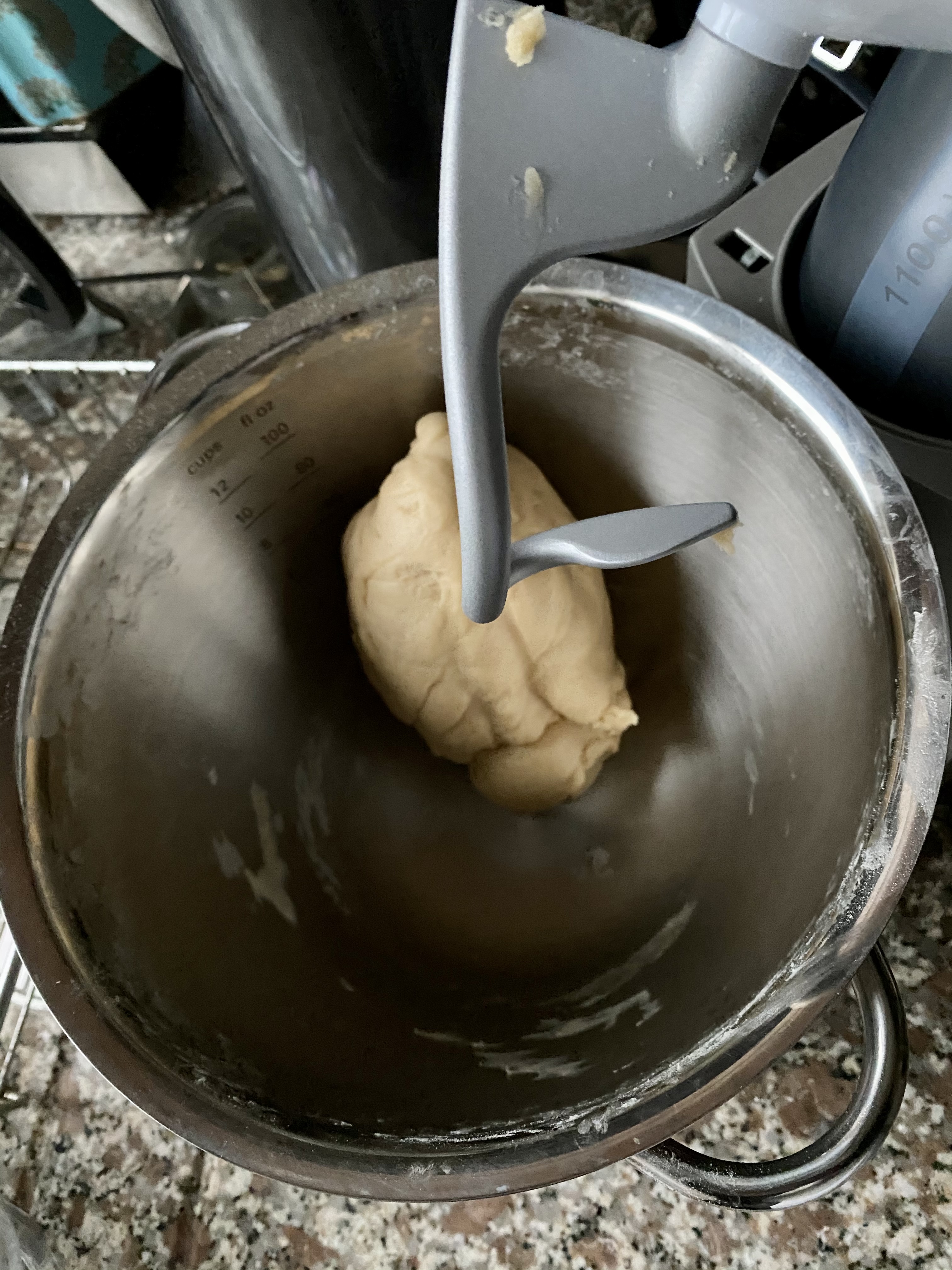
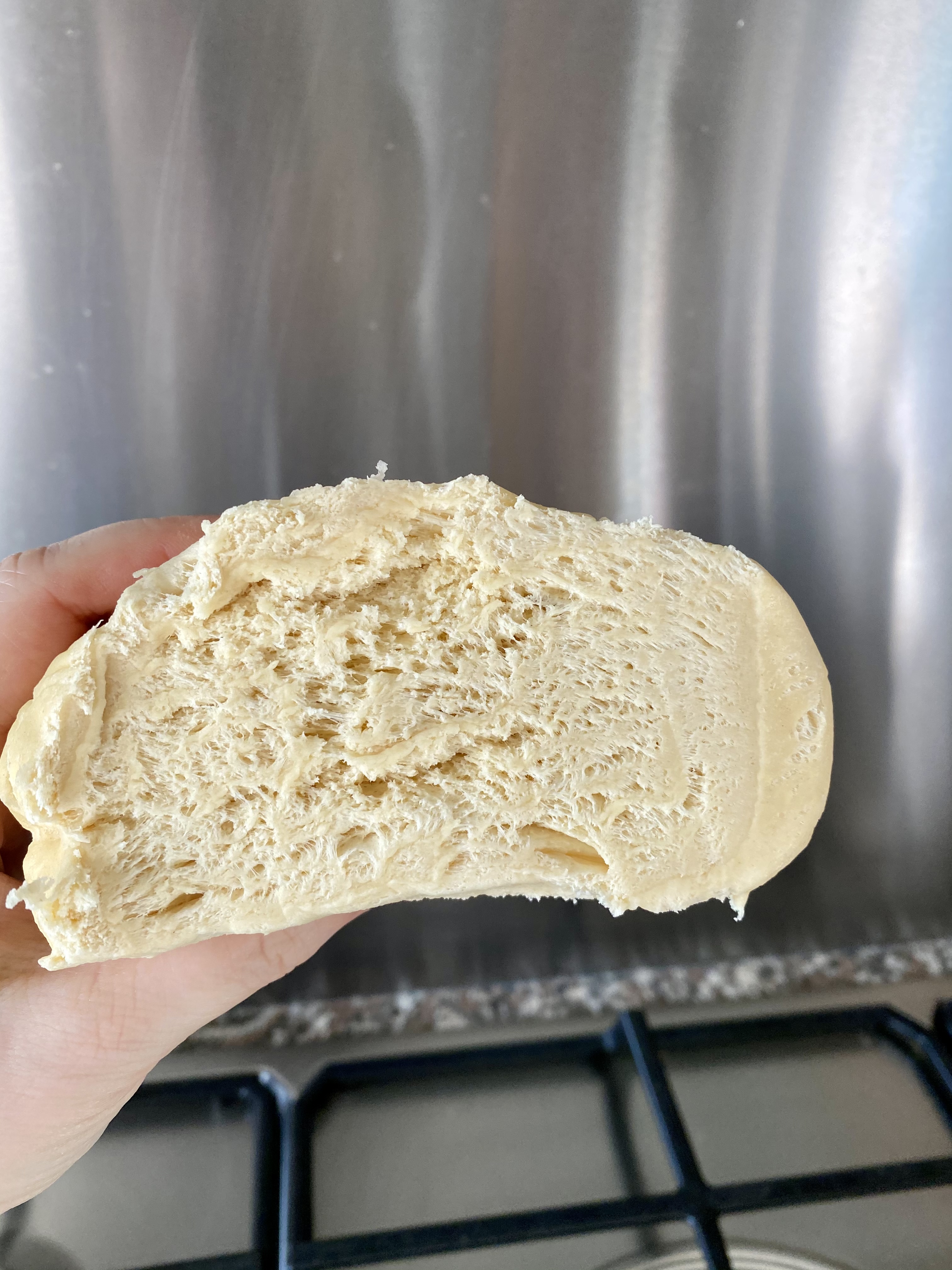
I used a Kenwood mixer with the dough hook attachment. With the mixer on its slowest speed slowly add the cubes of butter, then the beaten egg. Mix for 1-2 minutes to combine. With the mixer running on slow gradually add the flour and a pinch of the salt. Once the flour is added and the dough starts to form turn the mixing speed up to medium. That is number 4 ( of 8) on the Kenwood mixer I used. Knead the dough for 5-6 minutes. if there is dough sticking to the sides of the bowl, scrape down part way through. When the dough is fully mixed and kneaded,  the mixing bowl should be clean with minimal dough stuck to the sides (see photo).

Dough after kneading

Brush a large bowl with a little sunflower oil and add the ball of dough.

Dough ready to prove

Cover with a clean tea towel and put in the fridge for at least 6 hours. I left mine overnight for 15 hours.

Once the dough has proved and is ready to roll out make the chocolate and hazelnut filling.

Chocolate and Hazelnut Filling Recipe

90g unsalted butter

75g icing ( powdered) sugar, sieved

75g caster sugar

80g dark chocolate, broken into small squares

40g cocoa powder, sieved

1 teaspoon ground cinnamon

1/4 teaspoon of freshly ground nutmeg

70g roasted hazelnuts chopped

Method

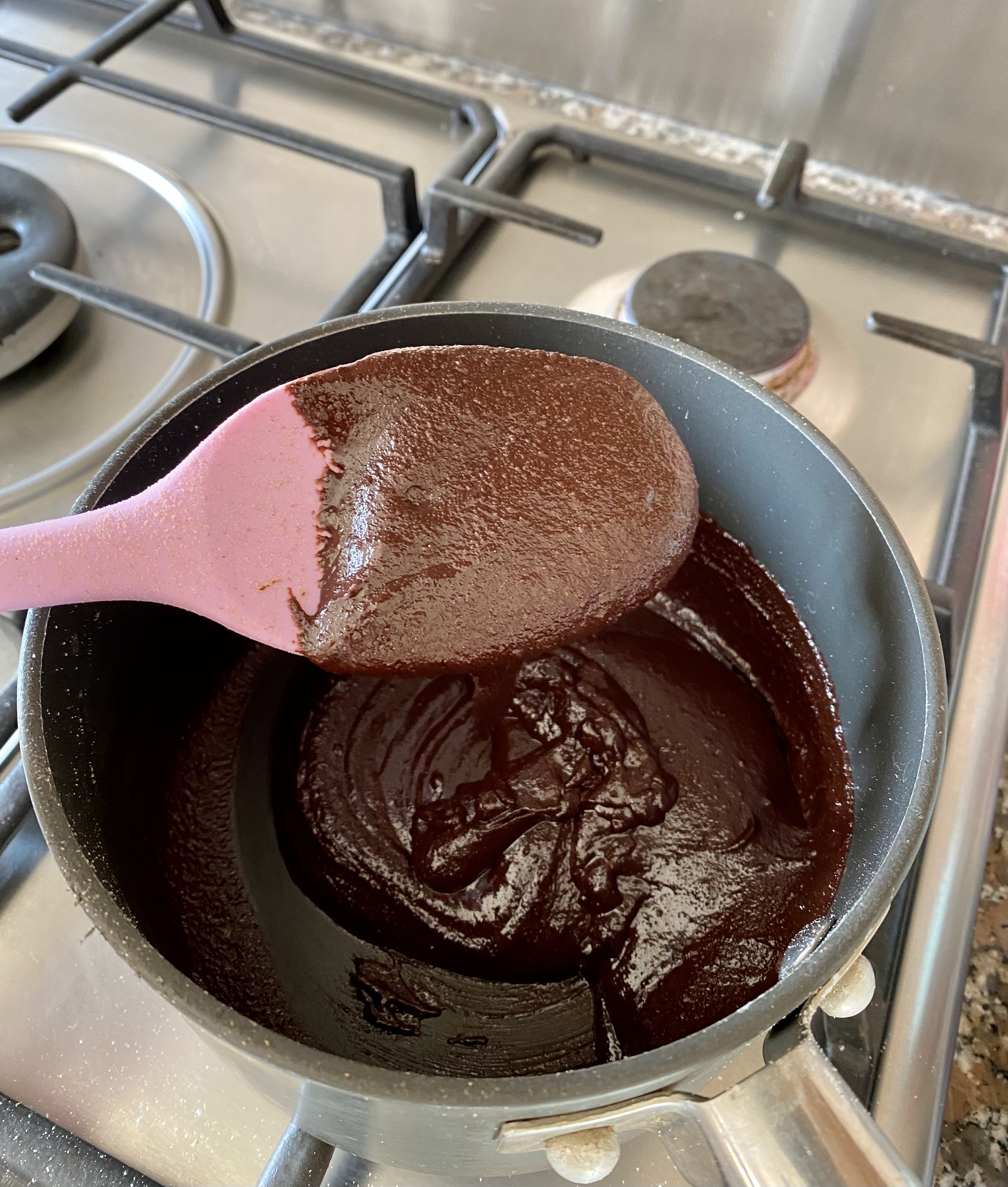
Melt the butter in a small saucepan on a low/medium heat. Remove from the heat, add the icing and caster sugars, then  stir to dissolve. Add the cocoa powder, cinnamon, nutmeg and stir to combine. Add the dark chocolate squares and mix. The heat of the filling will melt the chocolate. Give the mixture a good stir to ensure everything is combined ( see photo).

Chocolate Filling

Roll out the dough and make the Krantz Loaf

Divide the dough into 2 equal pieces. Place 1 half back in the bowl, cover and put back in the fridge.

Dough after 1st Prove Overnight

1st Prove done, dough cut into two

Place the other half onto a lightly floured surface and roll out into a rough rectangle shape around about 26 x 30 cm (10.2 x 11.8 inches). The dough should be thin, approximately 3 mm ( 0.1 inch) thick. If it has warmed up and softened put the dough on a tray and chill in the fridge for 10 minutes.

Half the dough rolled out

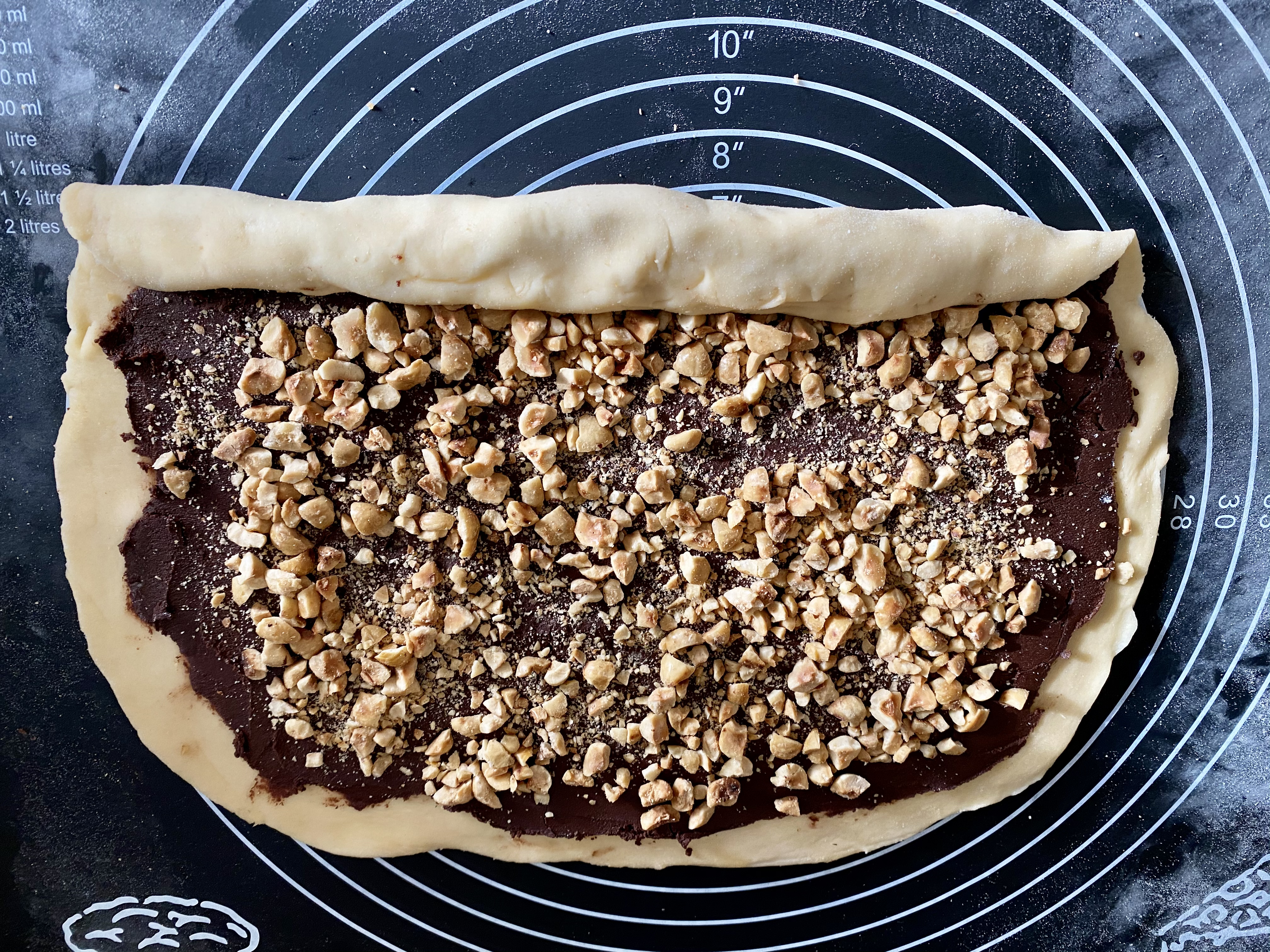
Spread half the filling on the dough with a knife until an even layer leaving about a 1 cm( 0.4 inch) gap around the edge. Sprinkle with half of the chopped hazelnuts.

With the long side of the rectangle in front of you, use a little cold water to dampen the dough edge furthest away from you.
Carefully and quickly roll up the dough into a long sausage and lightly press the dampened edge to seal.

Start Rolling

Using a sharp knife trim the ends ( about 1/2cm ).

All rolled up

Then split the dough down the middle of the sausage shape to reveal layers of dough and chocolate/hazelnut filling ( see photo).

Roll cut into two, ready to plait

You will have 2 semi cylinders with the cut side upwards.
Work quickly so the dough doesn’t soften too much. Twist each half and plait ( see photo).

Krantz plaited

Place into a loaf tin.

Krantz plait before 2nd Prove

Repeat with the other half of yeast dough.

Second Prove

Once both Krantz doughs have been rolled, filled and shaped, leave in the tins in a warm place for 1 to 1 1/2 hours. The Krantz loaves should increase in size by about 20-30% (see photo).

After 2nd Prove, ready to bake

Baking

Approximately 15 minutes before the end of 2nd prove heat the oven to 185C (365F) fan. Bake the Krantz loaves on the middle shelf for 10 minutes then turn the tins round and bake for another 15-20 minutes.

I baked mine for 27 minutes.

Sugar Syrup Recipe ( quantity for 2 Krantz)

100g caster sugar

100g cold water

1 tablespoon of honey

Heat the ingredients in a small saucepan on a medium heat until boiling. Cook for 3 minutes, take off the heat and then cool to room temperature.

Check the Krantz loaves are baked by inserting a skewer into the dough not the filling. The skewer should come out clean.

Just out the oven ready for syrup

Remove the loaf tins from the oven and immediately brush with the sugar syrup whilst they are still hot. The recipe recommends using all the syrup even though the top of each loaf looks quite drenched in syrup.

After Krantz has been brushed with syrup

Cool the Krantz loaves completely in the tin before removing. To serve use a serrated knife to slice. The Krantz loaves are best enjoyed eaten freshly baked. They will keep up to 3 days in an airtight container. They can also be frozen, which I recommend doing the day they are baked. They will keep for 2- 3 months frozen.

Two Krantz Loaves are better than one!

I really enjoyed making Chocolate Babka Krantz Loaves. These would be great for Easter, birthdays or for any reason whether in or out of lockdown!

Thanks to Yotam Ottolenghi, Sami Tamimi and David Lebovitz for guiding me through my first Chocolate Babka experience.